
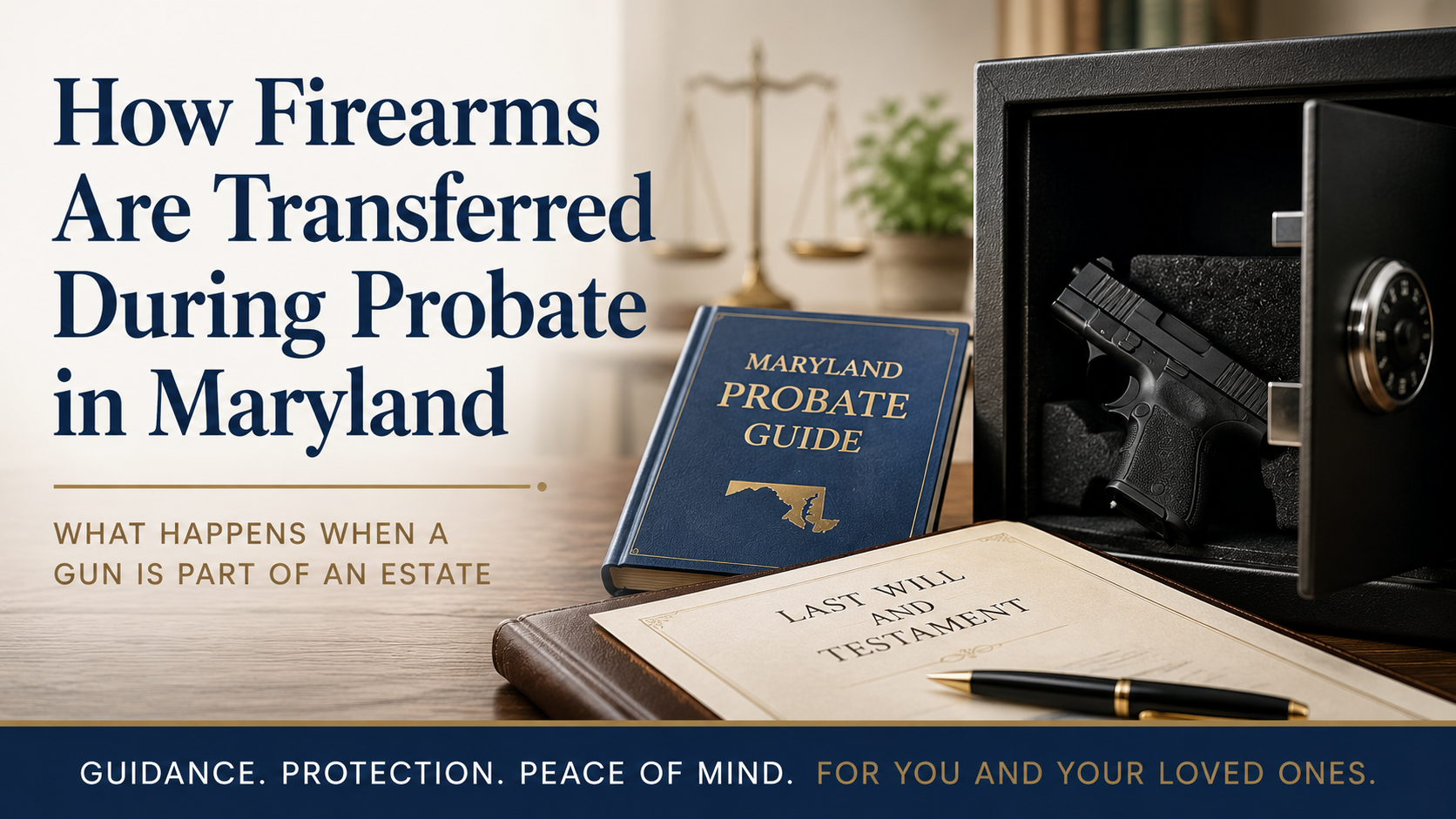
Most people assume firearms pass through an estate the same way other personal belongings do. In Maryland, however, firearms are subject to additional legal requirements that personal representatives must follow before they can be transferred to a beneficiary. Understanding these rules can help avoid costly mistakes and ensure the estate is administered properly.
Most personal property passes through probate without much fanfare.
A vehicle is retitled. Jewelry is distributed. Furniture goes to the people named in the will, or, if there is no will, to the heirs determined under Maryland law.
Then someone opens a gun safe.
Why This Matters: If you’re serving as the personal representative of a loved one’s estate, understanding Maryland’s firearm transfer laws can help you avoid legal complications and ensure the estate is administered correctly. Knowing the rules before transferring a firearm protects both the estate and everyone involved.
Why Firearms Are Treated Differently During Maryland Probate
It’s tempting to think of a firearm the way you’d think of a watch: it belonged to Dad, and now it belongs to whoever the will says. Someone hands it over, and that’s that.
But the gun-as-watch comparison skips a step and Maryland regulates the transfer of guns even if the person who owned it is deceased. A gun is a regulated asset, not a family heirloom, and Maryland doesn’t waive its transfer rules just because the gun is moving between family members. The personal representative must follow the same rules a gun dealer would have to follow, even though no sale is taking place.
Maryland Firearm Transfer Rules During Probate
Which rules apply depends on what kind of firearm the estate holds. Maryland sorts firearms into two categories – regulated firearms, and everything else – so the personal representative first needs to determine what type of gun they’re dealing with.
A regulated firearm is a handgun, or one of a defined list of assault weapons, and it requires real paperwork – an application, a background check, and a waiting period – before the transfer can happen.
“Everything else” is a rifle or shotgun, and these can be transferred without detailed paperwork. Rifles and shotguns cannot, however, be transferred to a recipient who does not have the legal right to own a gun.
With a regulated firearm, the background check catches an ineligible recipient automatically. With a rifle or shotgun, there’s no such check – so the personal representative alone has to decide who is legally allowed to receive it. Knowingly handing the gun to someone who isn’t allowed to have it is a crime, and it’s the personal representative who committed it, not the estate.
Whichever category the gun falls into, the personal representative certifies to the Register of Wills, in a short affidavit filed with the estate’s paperwork, that the required screening was done. The affidavit doesn’t replace the background check or the eligibility review – it’s simply the court’s record that the appropriate screening happened.
These distinctions are important because a personal representative has legal responsibilities beyond simply following the instructions in a will. Before any firearm changes hands, the representative must ensure the transfer complies with Maryland law, even when every family member agrees about who should receive it.
What Happens When a Beneficiary Cannot Legally Own the Firearm?
Consider a will that leaves a rifle to a nephew. Suppose that nephew has a felony conviction, or a protective order against him. Maryland law may bar him from owning the rifle, regardless of what the will says. If the personal representative knows the nephew is disqualified – or has good reason to suspect it – handing over the gun is against the law.
When the will and the law point in different directions, there are still lawful paths forward: holding the firearm in the estate, selling it through a licensed dealer and distributing the proceeds instead, redirecting it to a different eligible beneficiary, or turning it over to a dealer or law enforcement. Which option makes sense depends on the will and the personal representative’s judgment.
Can Someone Under 21 Inherit a Firearm in Maryland?
Finally, age adds one more wrinkle. A beneficiary under 21 can inherit ownership of a regulated firearm, but not possession. The estate or guardian must hold onto the gun until the beneficiary turns 21.
Ownership and possession are usually the same thing. With regulated firearms, the law separates the two.
The Bottom Line for Maryland Personal Representatives
Maryland’s firearm laws don’t make estate administration impossible. They simply recognize that firearms require additional safeguards before ownership changes.
While vehicles, jewelry, and furniture are usually distributed with relatively little paperwork, firearms often require additional review to ensure the transfer is legal. Understanding those requirements helps protect both the estate and the personal representative from unnecessary legal complications.
If you’re serving as a personal representative and an estate includes firearms, experienced legal guidance can help ensure the transfer complies with Maryland law while honoring the wishes expressed in the estate plan.